


In Kolomoisky v Various Respondents [2020] EWHC 1645 (Comm), the High Court ordered parties to revisit significant portions of disclosure after 6,209 WhatsApp messages were heavily redacted without adequate explanation. The court could not properly understand the documents, forcing a costly re-review of the material and delaying the proceedings.
Redaction failures are often discovered only after documents have been filed or circulated, and the consequences can be serious. Judges may reject bundles, order re-disclosure, or question the reliability of the evidence placed before them.
Sometimes the mistake is even more obvious. In 2019, lawyers acting for Paul Manafort filed court documents that appeared properly redacted. Black rectangles covered the sensitive passages. The problem was immediately obvious. The underlying text had never been removed. Anyone could copy and paste it.
Both situations illustrate the same point. Understanding how to redact a document properly is essential when preparing a trial bundle. Poor redaction can expose confidential information, undermine the integrity of the bundle, and create procedural risks that extend well beyond a simple formatting error.
In practice, how to redact a court bundle PDF properly starts with one principle: confidential information must be removed entirely, not merely hidden from view.
Proper redaction removes information permanently so it cannot be recovered through copying, editing tools, or metadata extraction. Simply hiding the text visually is not sufficient.
Sometimes, lawyers learning how to redact a document assume that placing a black rectangle over text creates a secure result. In reality, this is a common mistake, where the visible text is hidden but the underlying content remains embedded in the PDF.
For trial bundles, this distinction matters. Redacted documents may still contain personal identifiers, financial data, or privileged information if the redaction is not technically permanent.
UK courts expect careful judgment when redacting information in litigation. Guidance under CPR Part 32 and the Disclosure Pilot Practice Direction (PD 57AD) requires parties to remove unnecessary personal data before disclosure while maintaining the intelligibility of the evidence.
This balance is critical because excessive redaction can make documents harder to understand.
Mr Justice Swift warned of this problem in judicial review proceedings: “When information is redacted, any outsider’s understanding of the documents, and for this purpose the court is an outsider, is significantly hampered.”
Understanding how to redact a court bundle PDF properly requires two things. The first is knowing what information should be removed. The second is ensuring the redaction process produces court compliant document redaction through permanent PDF redaction and proper legal document sanitisation.
Redaction errors usually occur because practitioners underestimate how digital documents store information.
The scale of redaction work across the public sector illustrates how easily mistakes can occur when documents are handled manually. From April to June 2025, UK public authorities received 23,547 Freedom of Information requests, the highest quarterly total since records began. Each request may require extensive review and redaction before disclosure. The same pressures exist in litigation, where legal teams preparing trial bundles must review hundreds or thousands of pages and ensure sensitive information is removed safely before documents reach the court.
The most common mistake is relying on visual masking rather than permanent PDF redaction. Lawyers may believe they understand how to redact, but simple highlighting or drawing a black rectangle does not remove the underlying content.
The Manafort filing mentioned earlier remains a well-known example. Once journalists copied the hidden text beneath the redactions, sensitive information immediately became public.
Another issue arises when redactions are applied too broadly. Excessive masking can prevent the court from understanding the context of the evidence.
High Court litigation has repeatedly criticised unexplained redactions. In Kolomoisky v Various Respondents the court required parties to revisit large volumes of material because the redactions had not been properly justified.
Structural problems can also emerge when redacting information late in the bundle preparation process. If redaction takes place after pagination and indexing, the resulting trial bundle may become difficult to navigate.
A further technical risk involves hidden data. Lawyers sometimes forget to remove metadata from PDF court documents. Metadata may include author names, comments, tracked revisions or hidden text layers.
These issues are particularly relevant in redaction in electronic court bundles, where files are frequently shared across multiple systems before filing.
The safest approach is to combine procedural judgment with technical safeguards. Doing so ensures secure document redaction for court and protects the integrity of the final trial bundle.

Understanding the rules for redacting documents UK courts expect is essential for litigation practice.
Redaction must strike a balance between privacy and the principle of open justice. Sensitive personal data such as home addresses, national insurance numbers or medical information should normally be removed before documents are included in trial bundles.
However, unnecessary redaction can undermine the usefulness of the evidence.
Courts have repeatedly warned against routine masking of names or contextual details. Mrs Justice Lieven criticised such practices in family proceedings after a bundle included widespread unexplained redactions, including the name of a consultant paediatrician involved in the case, calling it "both an unnecessary hearing and a considerable waste of public funds".
The rules for redacting documents UK courts apply are therefore both procedural and technical.
When preparing redacted documents, practitioners should ensure that:
The technical stage is equally important. Proper legal document sanitisation requires that lawyers remove metadata from PDF court documents, confirm the output remains a searchable redacted PDF, and ensure the final file meets the standard for court compliant document redaction.
When these steps are followed correctly, redaction in electronic court bundles becomes part of a predictable litigation workflow rather than a risk point in the bundle preparation process.
For many firms, the challenge is not understanding the theory of redaction but applying it consistently across large volumes of documents.
Specialised litigation software can make this process significantly easier.
Lexiti document redaction is designed specifically for legal teams preparing court bundles and complex disclosure materials.
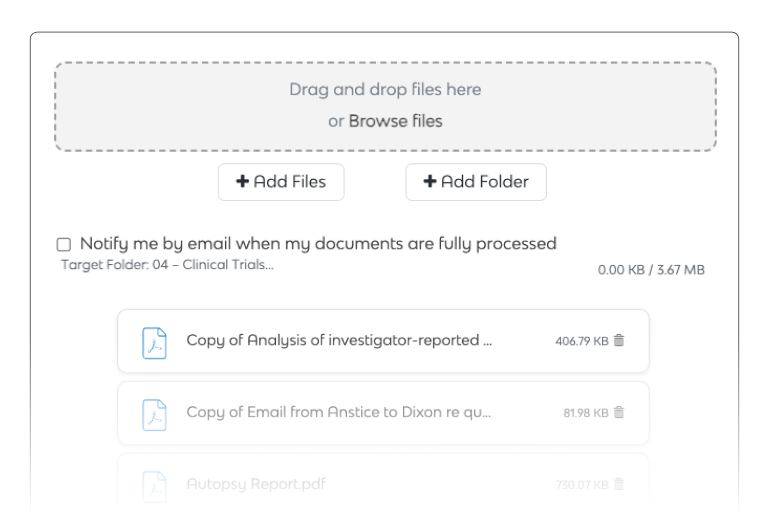
Step 1: Upload and convert documents
Upload your documents and Lexiti will automatically convert them to PDF, extracting fully searchable text ready for targeted redaction.
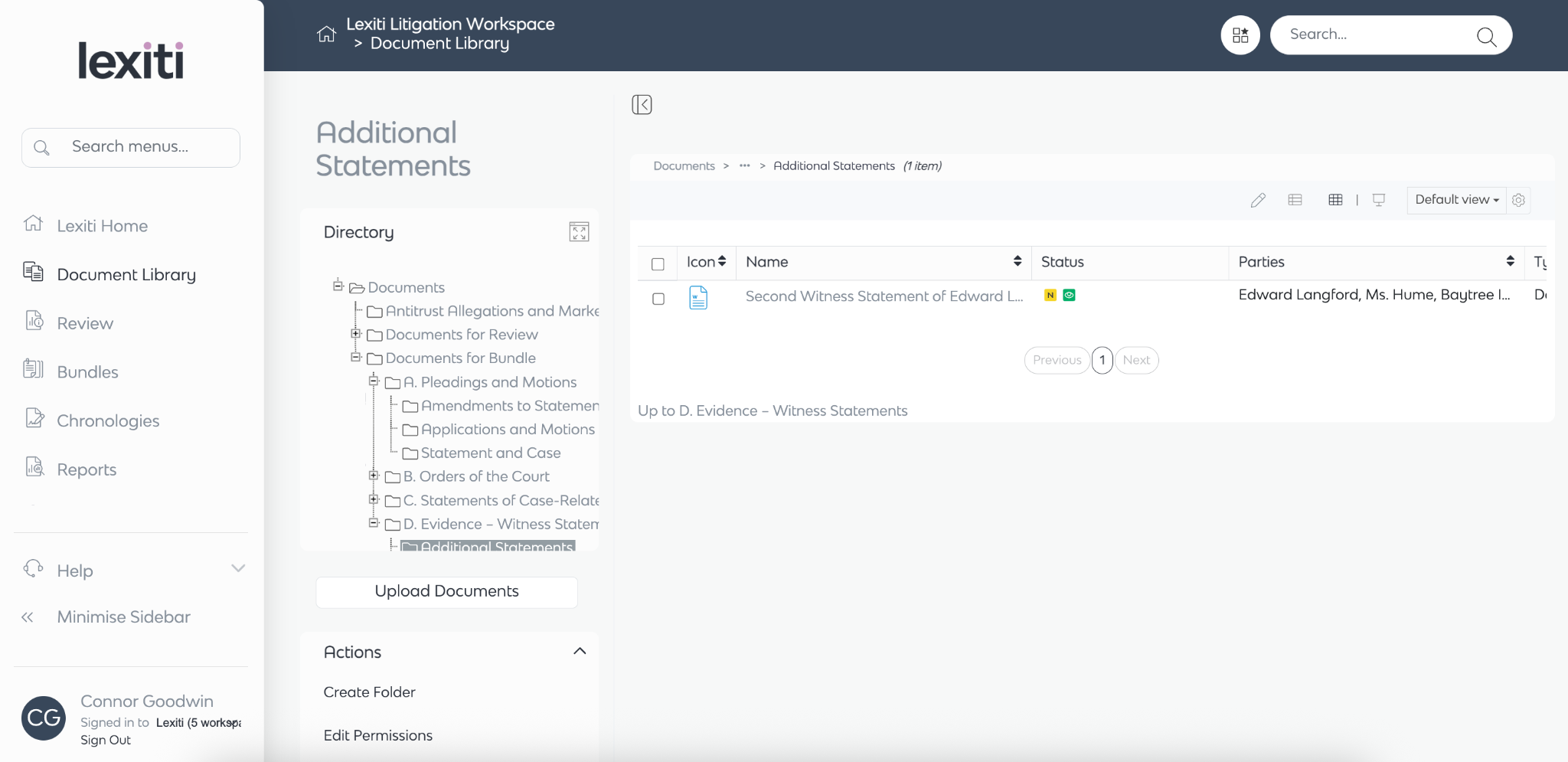
Step 2: Select the document you wish to redact
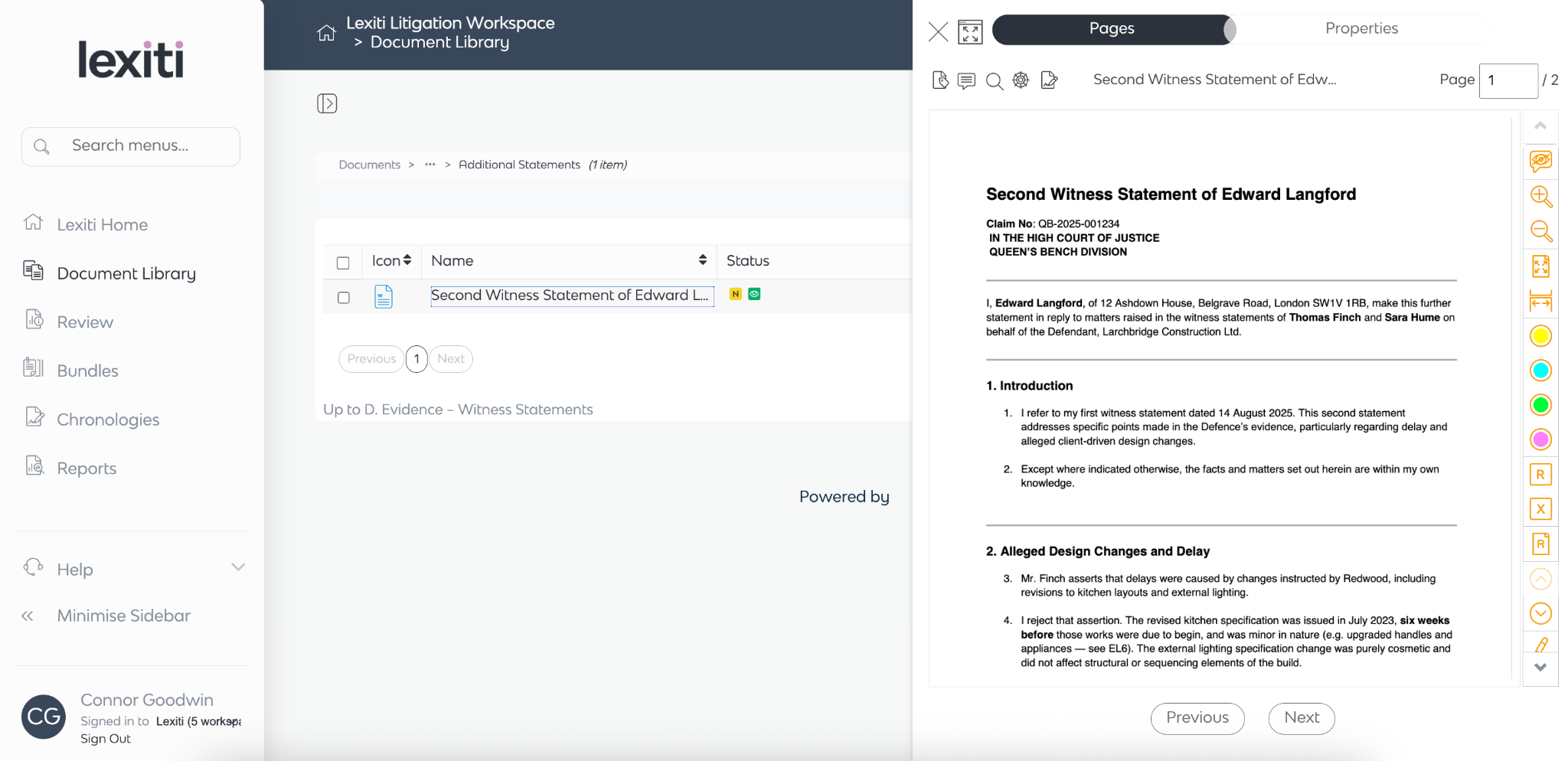
Open the document in Lexiti’s showpane on the right-hand side of the workspace.
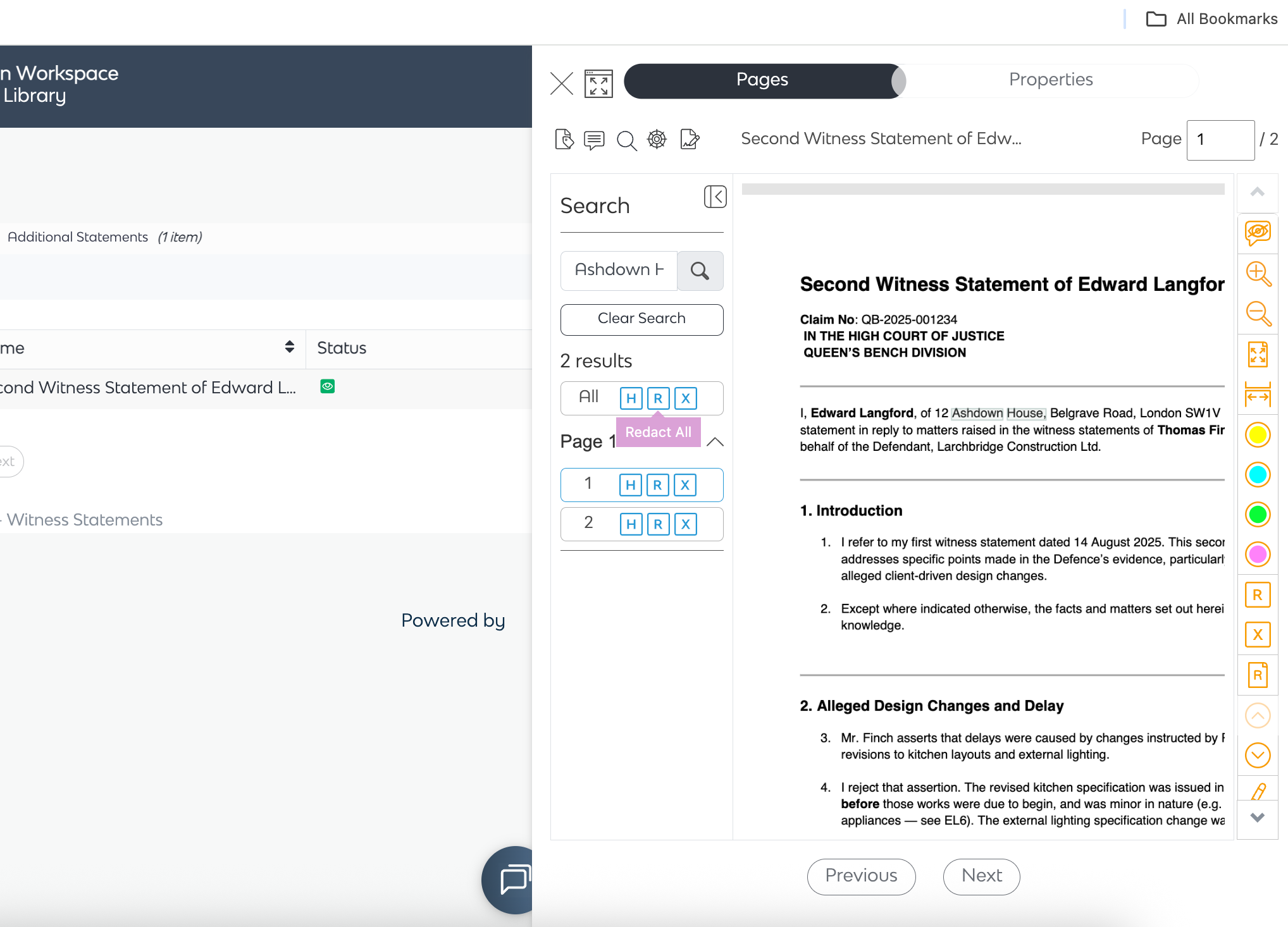
Step 3a: Redact via keyword search
Enter the term you wish to redact, then choose whether to redact every instance automatically or review and redact individual occurrences page by page.
Step 3b: Free-hand redact
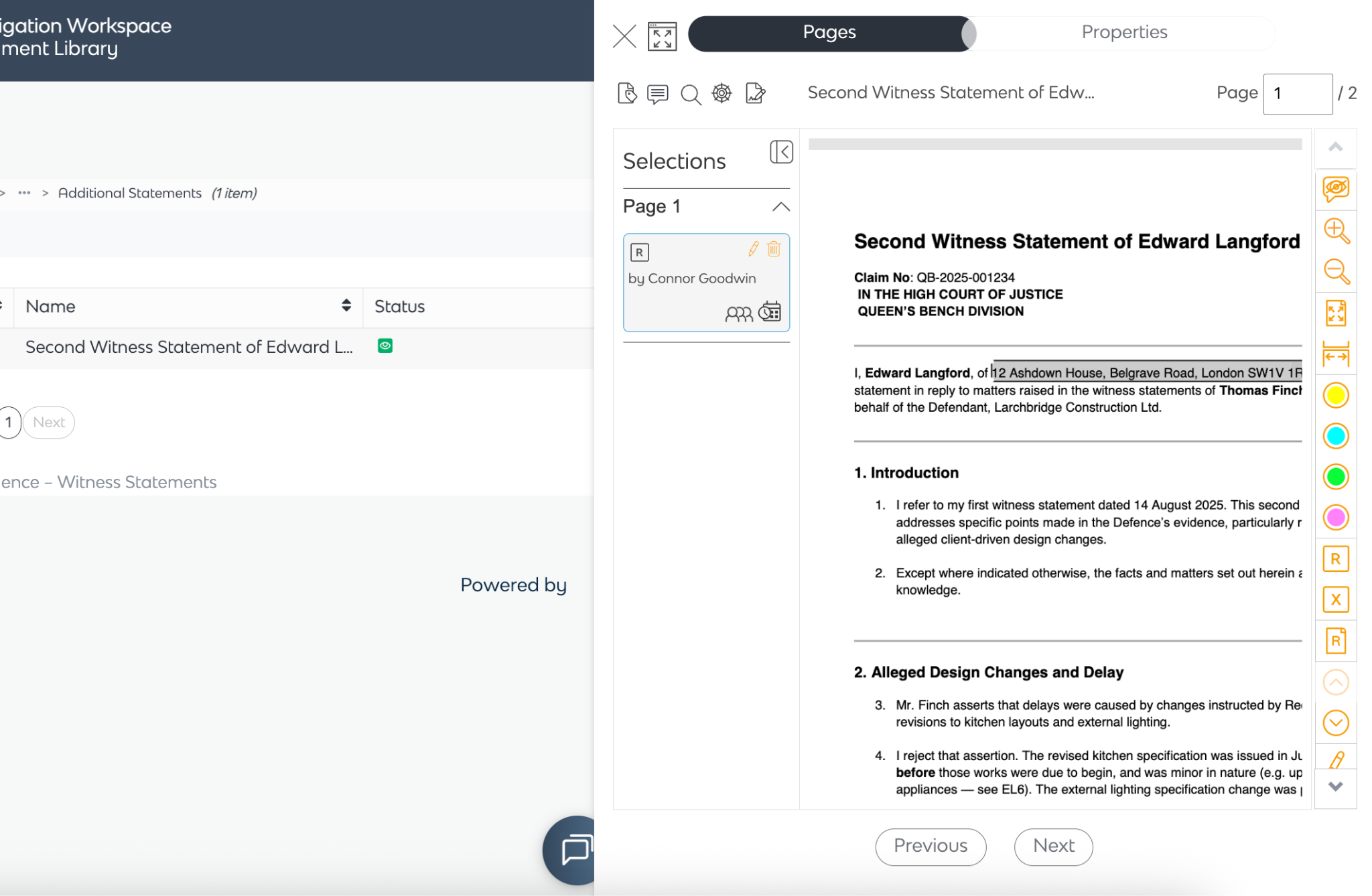
Using the ‘R’ tool on the right-hand toolbar, click and drag over the area of the page you wish to redact.
A corresponding selection entry will appear on the left-hand side, allowing you to add comments or notes to the redaction.
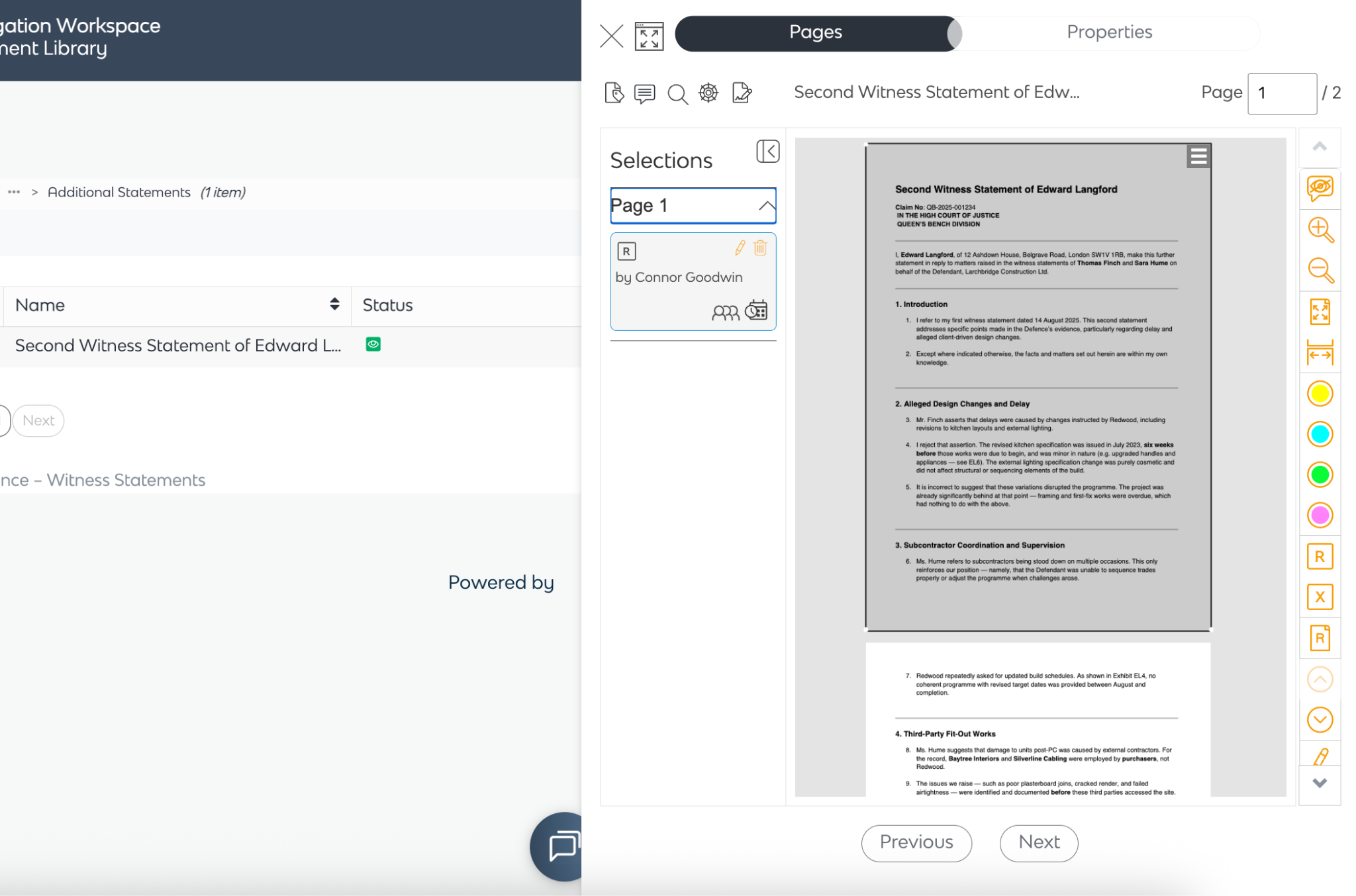
Step 3c: Full-page redact
A full-page redact tool is also available on the right-hand side, allowing you to redact an entire page with a single action.
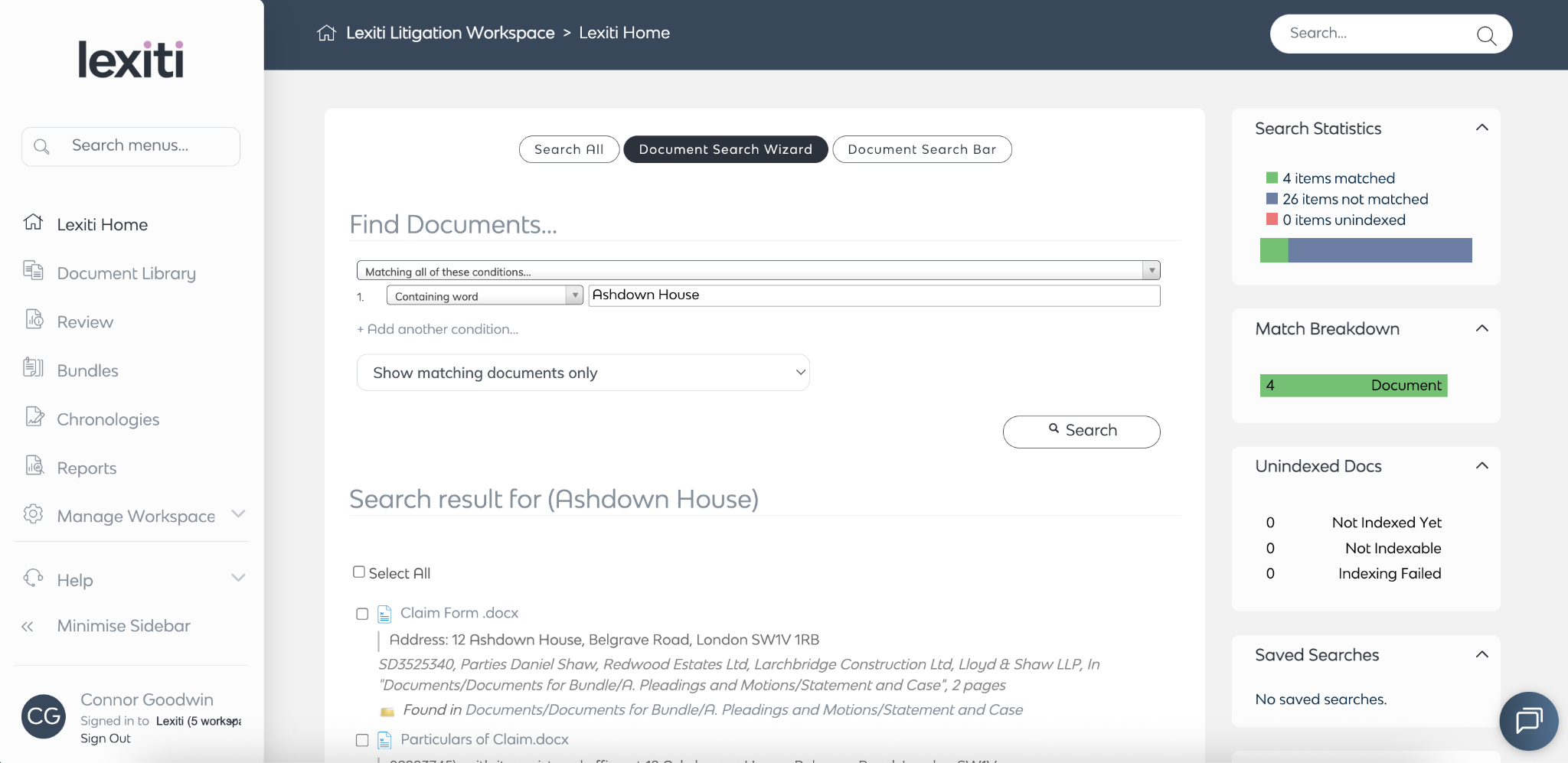
Tip: Use Lexiti’s workspace search to prepare documents for redaction
Lexiti’s search wizard can be used to identify responsive documents across your workspace and organise them into folders ahead of the redaction process.
Even when the redaction process appears complete, a final verification stage is essential.
The first step is confirming that permanent PDF redaction has actually been applied. Attempting to copy and paste text from a redacted section should return no recoverable content.
Next, the document should be reviewed in a separate PDF viewer to confirm that the redacted documents remain secure across different systems.
At this stage, practitioners should also confirm that they have successfully removed metadata from PDF court documents, ensuring no hidden author data or comments remain embedded in the file.
The structure of the trial bundle should then be reviewed to confirm that pagination and indexing remain consistent after redaction.
Finally, the redacted file should be stored separately from the original unredacted version. Keeping both versions ensures the evidential record remains intact while allowing the redacted bundle to be shared safely with the court and other parties.
When these checks are complete, the result is a properly prepared bundle that meets the standard for court compliant document redaction.
Redaction mistakes rarely appear immediately. They are often discovered later, sometimes by journalists, opposing counsel, or the court itself.
When that happens, the problem is no longer technical. It becomes procedural.
Courts expect lawyers to understand how to redact a document, apply the rules for redacting documents UK courts rely on and ensure their trial bundles are both secure and intelligible.
Technology now plays an important role in achieving that standard. Platforms such as Lexiti document redaction help legal teams perform secure document redaction for court, apply permanent PDF redaction, and ensure sensitive information cannot be recovered from the final bundle.
Understanding how to redact a court bundle PDF properly ultimately protects more than confidential data. It protects the credibility of the litigation process itself.
Start your free trial to explore how Lexiti supports complex litigation document review.